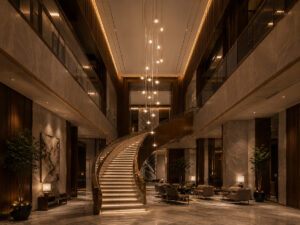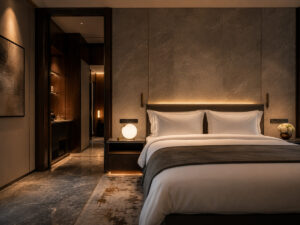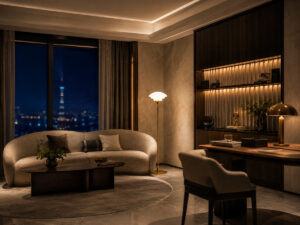
For many property owners, the concept of lighting design feels like a mystery. You hand over your architectural blueprints, and somehow, months later, you walk into a beautifully illuminated space. But what exactly happens in between? Some assume it is merely “picking out pretty light bulbs,” which inevitably leads to a room full of blinding glare and harsh shadows.
True architectural illumination is a highly scientific discipline. As your dedicated lighting consultant, Guocio is here to demystify the art of illumination. Whether we are crafting an intimate Home lighting design or engineering large-scale Commercial Lighting Solutions, here is our definitive 5-step process to ensure zero mistakes and a five-star result.
Step 1: Discovery & Concept Development
The process begins with listening. We analyze your architectural blueprints, interior design mood boards, and your specific lifestyle or business needs.
If we are developing an Office lighting design, the focus will be on energy efficiency, screen-glare reduction, and creating dynamic Office lighting Solutions that boost employee productivity. Conversely, for a residential project, we focus on mood. We determine how to execute your favorite Living Room Lighting Ideas, and how to create soothing, melatonin-friendly bedroom lighting Solutions for your master suite.
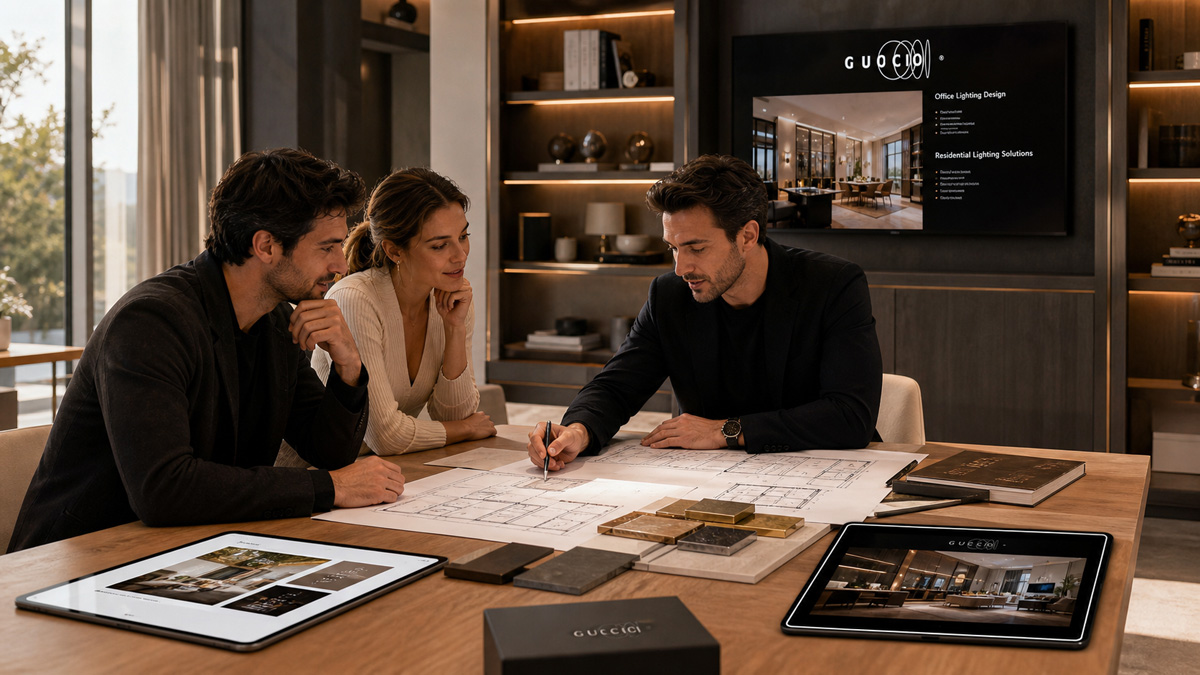
Step 2: Schematic Design & Photometric Calculation
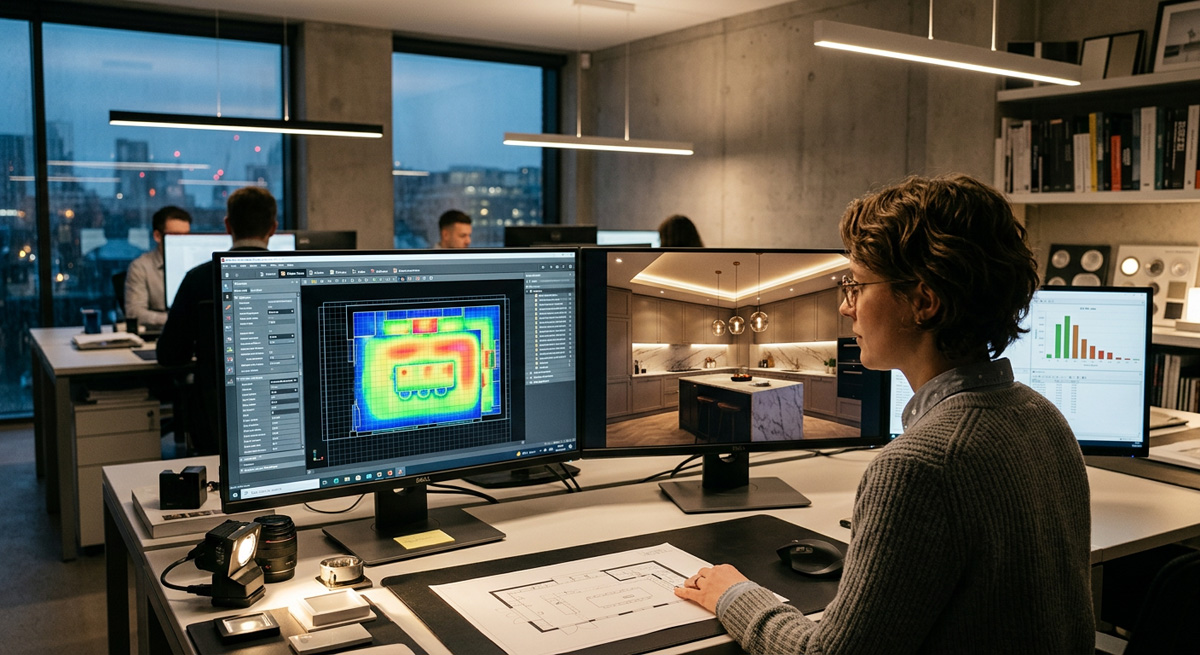
This is the core phase that separates professionals from standard electricians. We create a 3D model of your space using advanced photometric software (like DIALux) to simulate how light will behave.
For instance, during a kitchen lighting design, we mathematically prove that the countertops will receive a safe 500-lux illumination without casting body shadows, finalizing our kitchen lighting Solutions. We refine the bedroom lighting design to guarantee the light remains indirect and glare-free. This mathematical approach guarantees success before construction even begins.
Step 3: Fixture Specification & Sourcing
Once the technical blueprint is perfected, it is time to select the physical hardware. This is where the aesthetic vision comes to life.
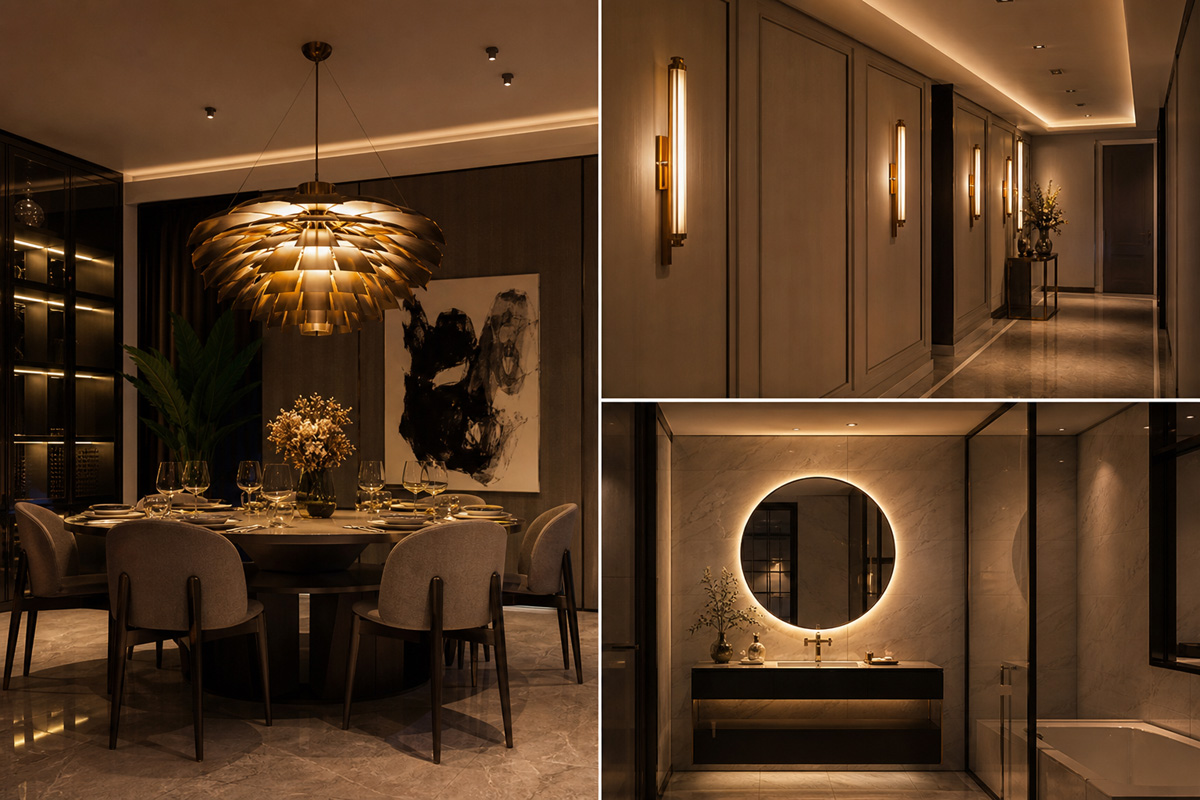
- The Ambient Base: We specify ultra-thin Ceiling Lamps and deep-recessed Spot Lights to provide a clean, invisible layer of architectural illumination.
- Task & Drama: For your living room lighting design, we might pair a statuesque Floor Lamp beside the sofa with an elegant Table Lamp on the console, creating layered, highly adaptable living room lighting Solutions.
- Statement Pieces: To complete the look, we integrate beautiful Wall Lamps in the corridors, an illuminated art-mirror in the vanity, and a perfectly proportioned Pendant Lamp suspended over the dining table.
Step 4: Smart Control Systems Integration
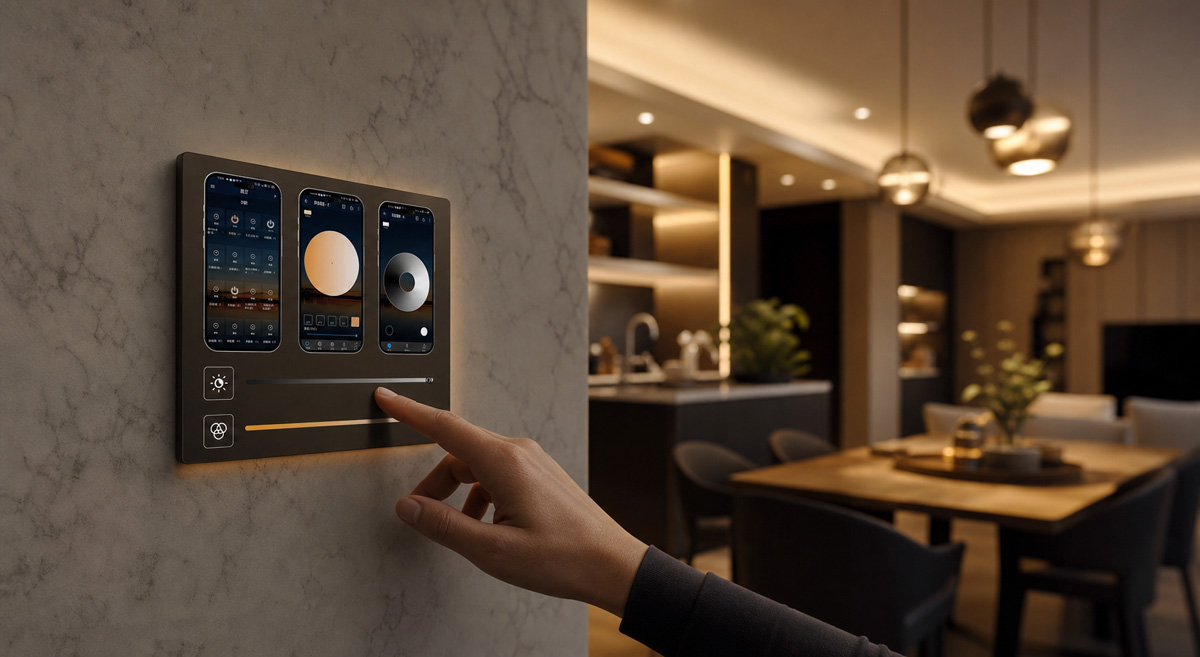
A brilliant design is useless if you cannot control it easily. Lighting is no longer just hardware; it is software. We design the “brain” of the system, mapping out dimming protocols (DALI, Triac) and programming smart keypads. We create custom “scenes”—so with one touch, your bright, functional kitchen instantly transitions into a moody, low-lit entertaining space.
Step 5: Commissioning and Final Aiming
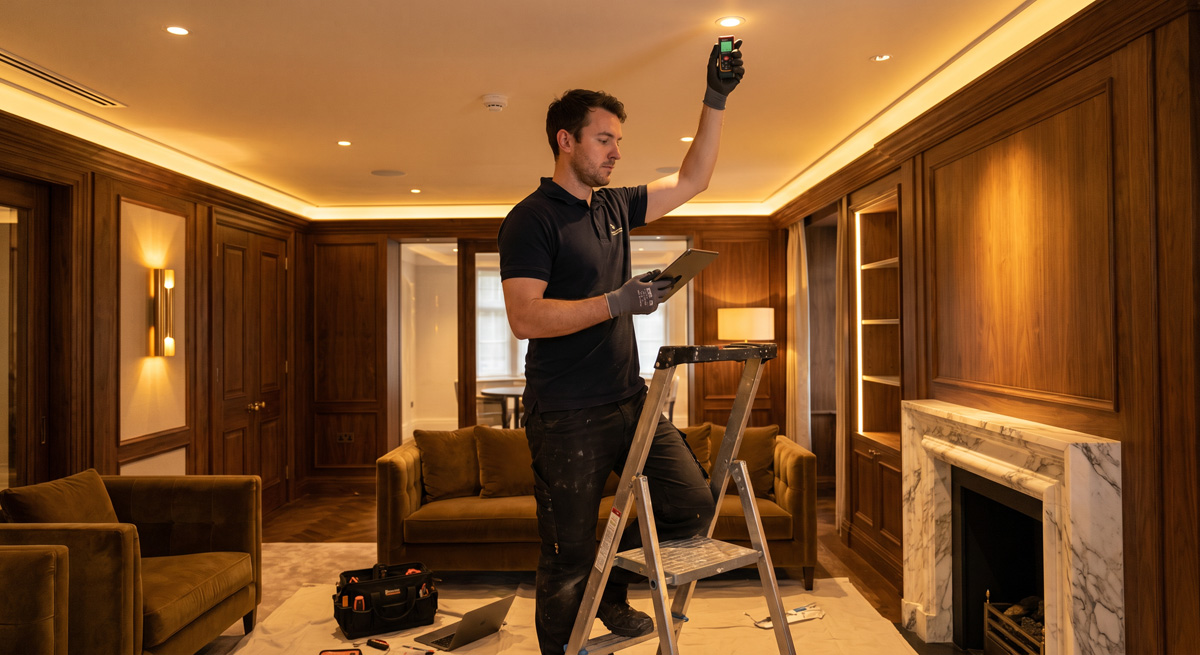
We do not just ship the fixtures and disappear. The final step occurs on-site after construction is nearly complete. Through our comprehensive lighting design services, our team ensures that every spot light is aimed perfectly at your artwork, the dimming curves are perfectly smooth, and every scene behaves exactly as simulated in Step 2. This final “magic touch” ensures reality exceeds your expectations.
Skipping the Process VS The Guocio Method
Why pay for a design process? Because skipping these steps guarantees costly mistakes. Here is the reality:
| Project Aspect | Skipping the Process (Electrician Guesswork) | The Guocio 5-Step Process |
|---|---|---|
| Placement & Planning | Random placement based on ceiling joists | Mathematically calculated via 3D photometric software |
| Visual Comfort | High risk of blinding glare and shadows | Strict UGR (Glare) control for ultimate eye protection |
| Cost Efficiency | Expensive electrical rework after drywall is up | Done right the first time; zero costly rework |
| Final Atmosphere | Flat, basic illumination | A five-star, cinematic atmosphere with smart scenes |
Frequently Asked Questions (FAQs)
1. How long does the lighting design process take?
The timeline varies based on project size. A standard residential plan may take 2-4 weeks, while complex Commercial Lighting Solutions can take several months from concept to final commissioning.
2. When should I hire a lighting consultant?
You should hire a lighting consultant during the architectural schematic design phase, long before electrical wiring or drywall installation begins to avoid costly rework.
3. What happens during the photometric calculation phase?
During this phase, we use 3D software to simulate how light bounces in the room. We ensure lux levels are adequate and the Unified Glare Rating (UGR) is kept low for maximum visual comfort.
4. Does the process differ for commercial projects?
Yes. While the core steps remain the same, Office lighting design requires stricter adherence to building energy codes, employee wellness standards, and daylight harvesting integration.
5. Do I need to buy the decorative fixtures myself?
No. Guocio provides an end-to-end service. Through our lighting design services, we both create the blueprint and supply premium fixtures like Pendant Lamps and Spot Lights to guarantee the result.
6. Can smart home controls be added during the process?
Absolutely. Step 4 of our process is dedicated entirely to integrating smart control systems, allowing you to trigger pre-set lighting scenes with a single button.
Start Your Lighting Journey Today
Understanding the process is the first step toward transforming your space. Trust Guocio to guide you from the initial concept to the final, breathtaking illumination.