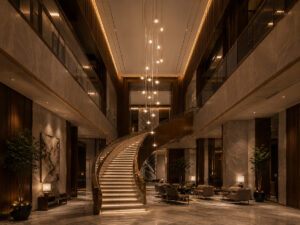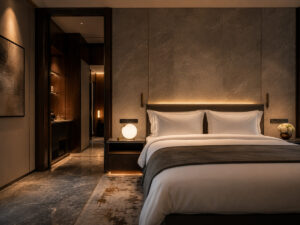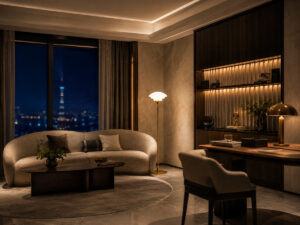
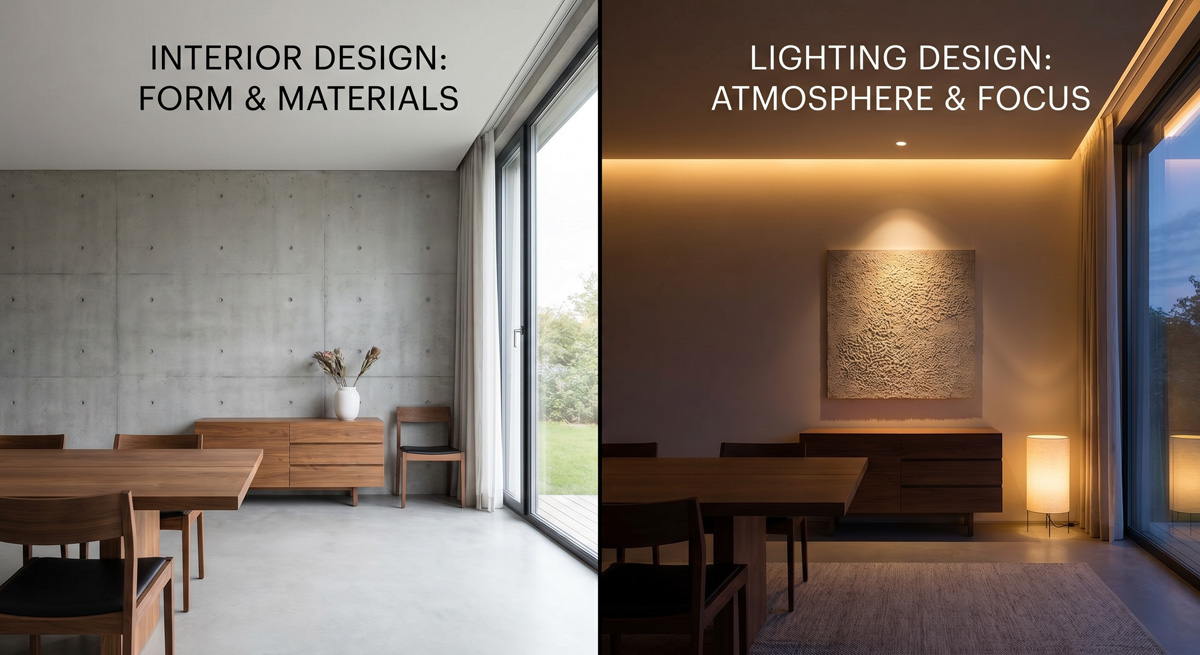
In the world of high-end architecture, there is a saying: “Architecture is the body, interior design is the clothing, and lighting is the soul.” While many people use the terms interchangeably, the distinction between lighting design vs interior design is what separates a good project from a masterpiece.
At Guocio, we specialize in professional lighting design services that work in harmony with interior designers to create spaces that are as functional as they are beautiful. Here is why understanding the difference matters for your next project.
1. Macro vs. Micro: The Scope of Design
An interior designer is the conductor of the entire spatial experience. They focus on the macro: space planning, furniture, color palettes, and material finishes. Their goal is to create a cohesive aesthetic and functional layout.
A lighting consultant, however, focuses on the micro-science of light. We don’t just look at the fixture; we look at the photons. We calculate Beam Angles, Lux levels, and Color Rendering Index (CRI) to ensure that the beautiful materials chosen by the interior designer are revealed in their best light.
2. Aesthetics vs. Optics: Product Selection
The difference is most clear in how products are selected. An interior designer might choose a stunning decorative Pendant Lamp to serve as a visual focal point over a dining table.
A lighting designer takes it further. We ensure that same table is lit with precision—using hidden Spot Lights to highlight the center of the table without causing glare for the guests. Whether it’s a sleek Ceiling Lamp or an architectural Wall Lamp, we focus on the optical performance as much as the exterior style.
3. Technical Integration in Commercial Spaces
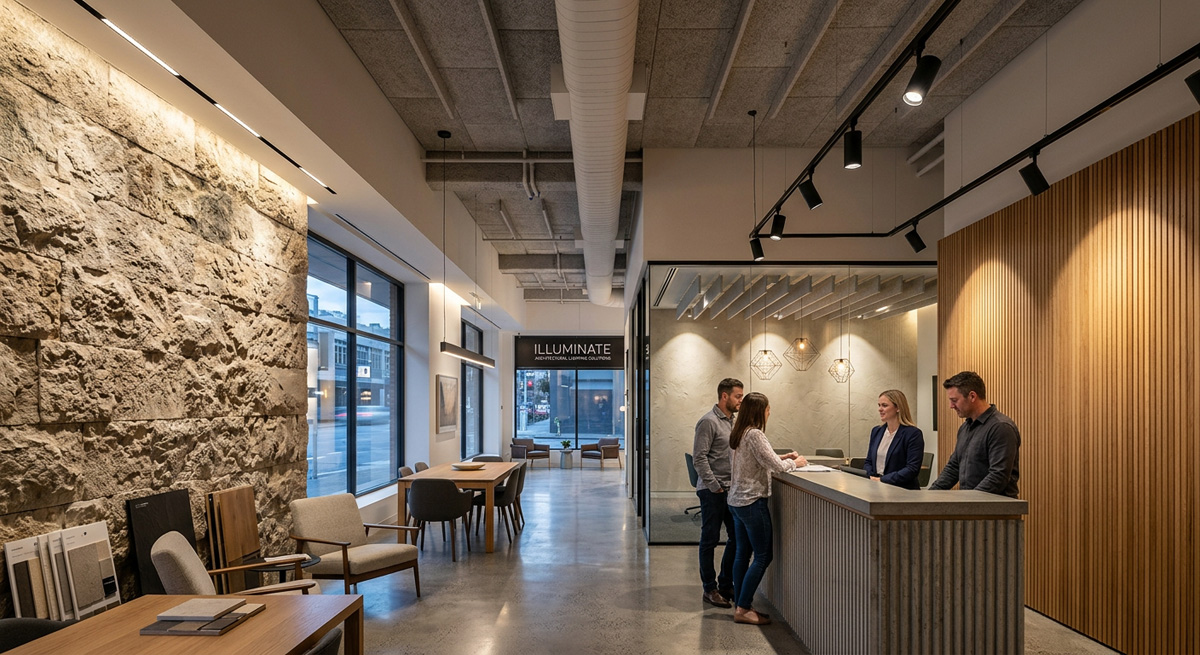
In Commercial Lighting Solutions, the difference is professional necessity. While an interior designer creates the brand’s visual identity, the lighting designer manages the technical requirements. For Office lighting design, this means balancing task lighting for productivity with ambient lighting for well-being, all while meeting strict energy efficiency codes.
Our expertise as consultants ensures that smart control systems are integrated properly, allowing for automated scenes that shift light intensity throughout the day—a level of technicality that usually falls outside the scope of traditional interior design.
4. Synergy: Why You Need Both
The best results happen when an interior designer and a lighting consultant collaborate from the start. This synergy ensures that:
- Architectural features are grazed with light to show texture.
- Task areas, like kitchens or desks, have shadow-free illumination.
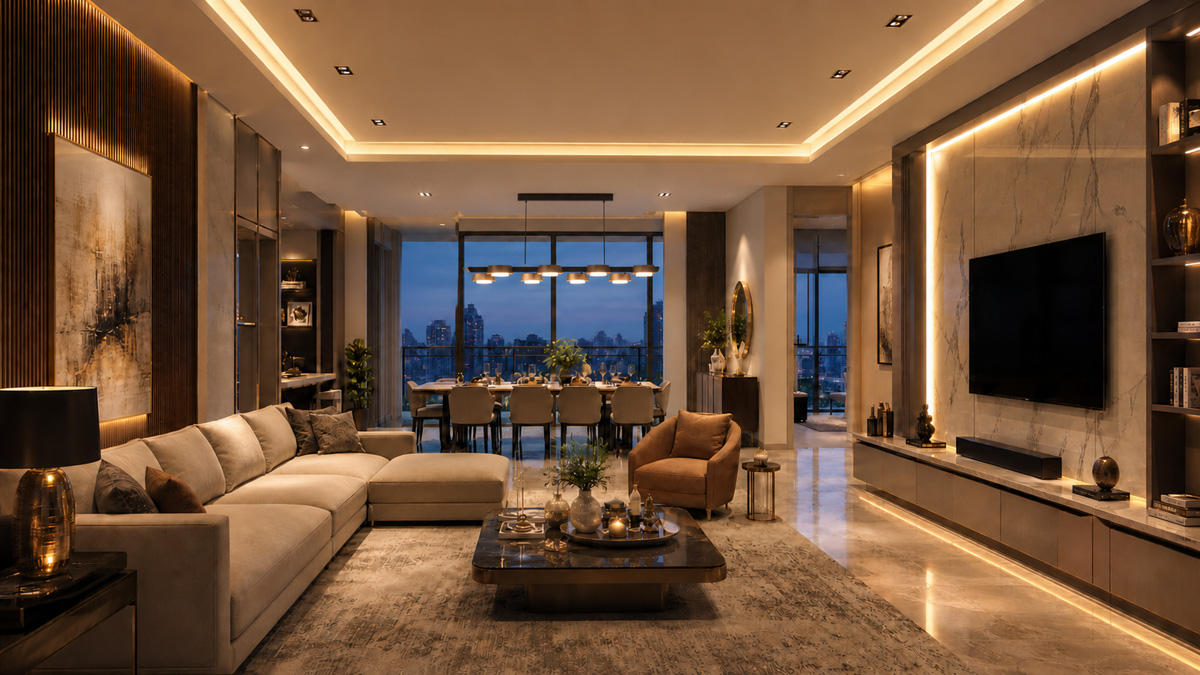
- The emotional mood of the home or business can be transformed at the touch of a button.
Frequently Asked Questions
Does an interior designer usually handle the lighting?
Most interior designers handle decorative lighting selection. However, for Home lighting design that involves complex layers or smart systems, a specialist is essential to manage the technical blueprints and optical precision.
Why is a lighting consultant necessary for B2B projects?
In commercial projects, light is a business tool. A specialist ensures that the lighting maximizes the ROI by improving customer stay-time in retail or increasing focus in Office lighting design.
Can lighting design be added after the interior design is finished?
It is possible, but it often leads to visible wiring or compromised fixture placement. Engaging lighting design services during the planning phase allows for “invisible” lighting where the source is hidden, and only the effect is seen.
How do lighting designers choose fixtures differently?
Interior designers look at the lamp’s style. Lighting designers look at the ‘photometrics’—how the light spreads, the warmth (Kelvin), and how accurately it renders colors (CRI).
What is the role of Guocio in this collaboration?
Guocio provides the bridge between vision and reality. We offer professional consultation, technical layouts, and bespoke manufacturing of fixtures like Floor Lamps and custom architectural lights to ensure the interior designer’s vision is perfectly illuminated.
Conclusion: Two Sides of the Same Coin
While lighting design and interior design are different disciplines, they are inseparable in high-end projects. One defines the space; the other defines how we feel within it.
Elevate your next project by bringing in the masters of light. Contact Guocio today for a professional consultation and let us help you reveal the true potential of your design.