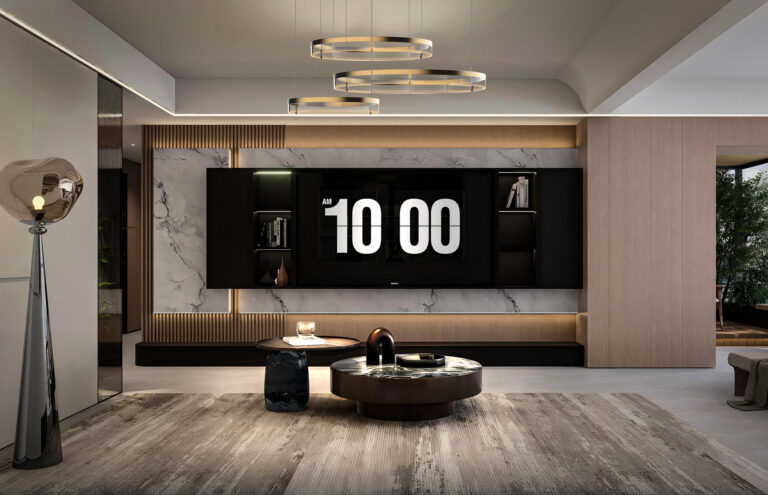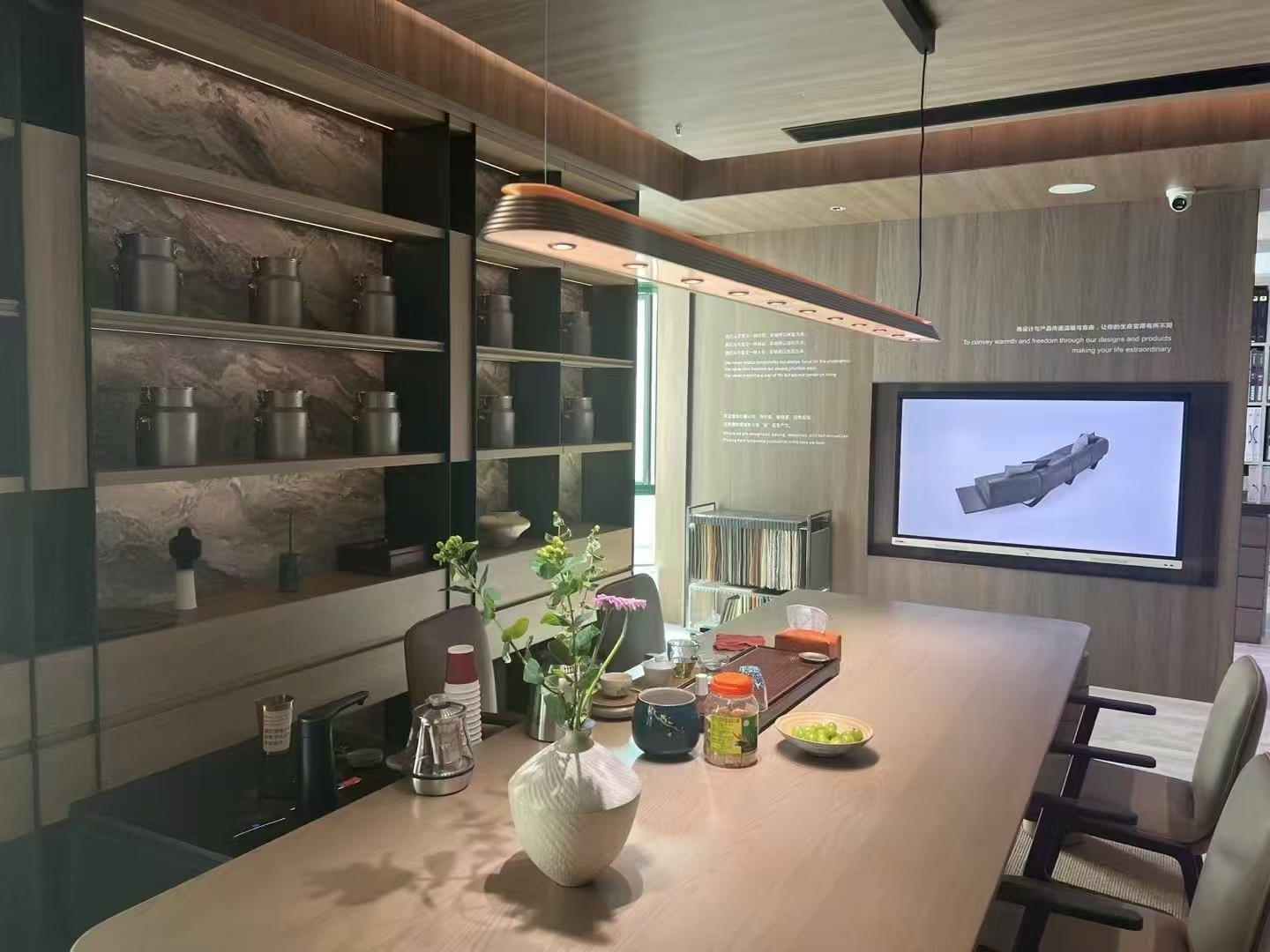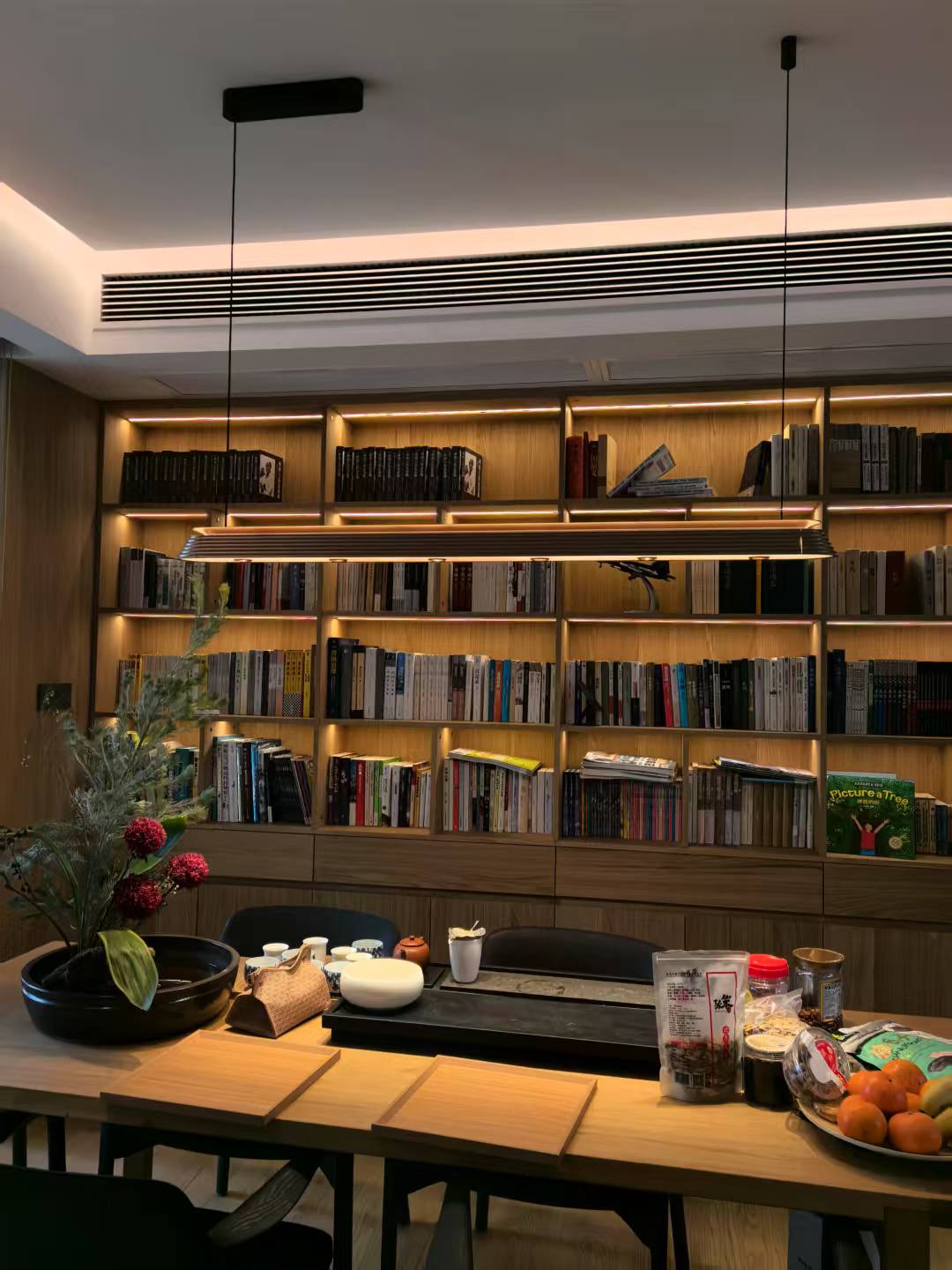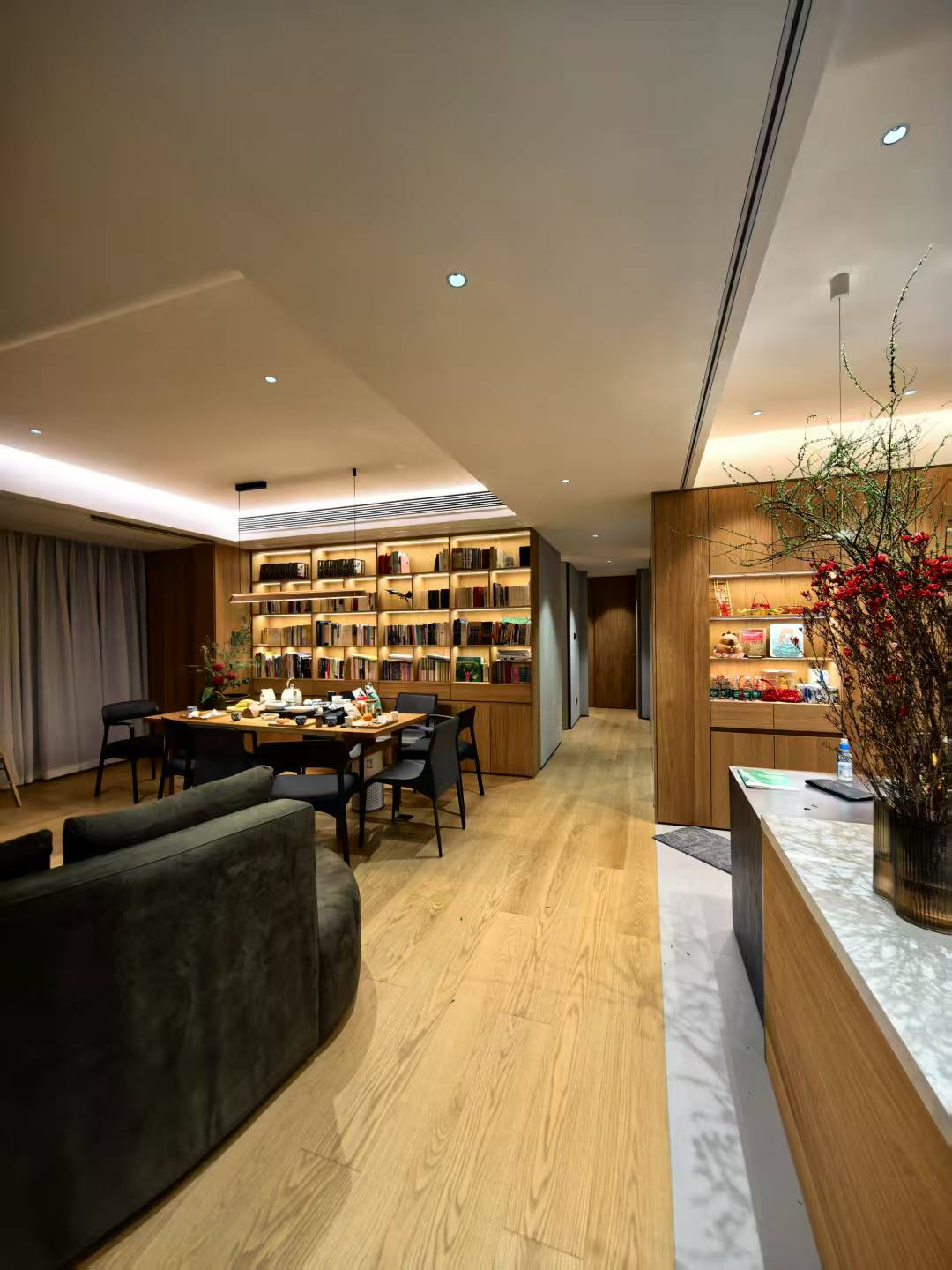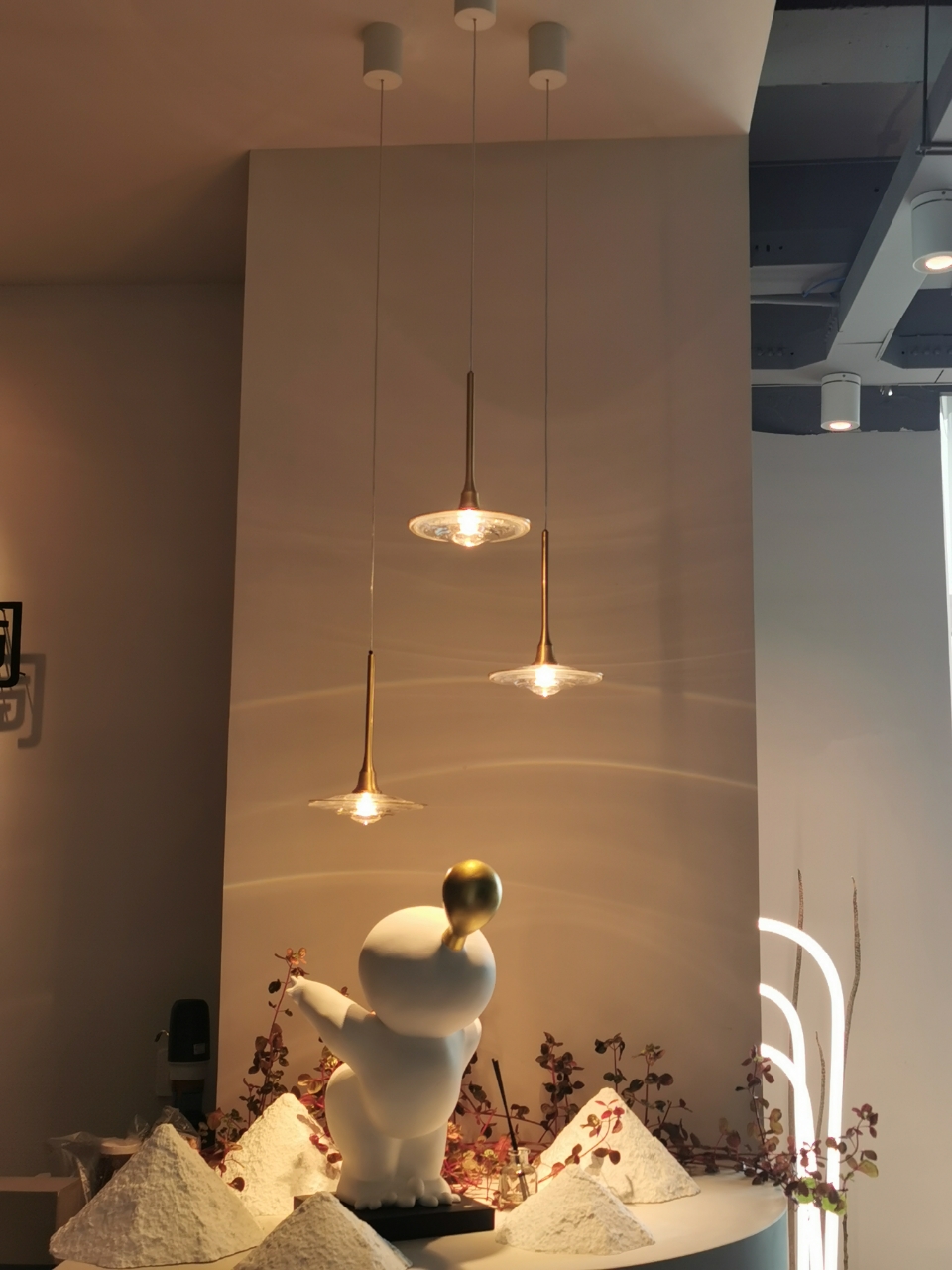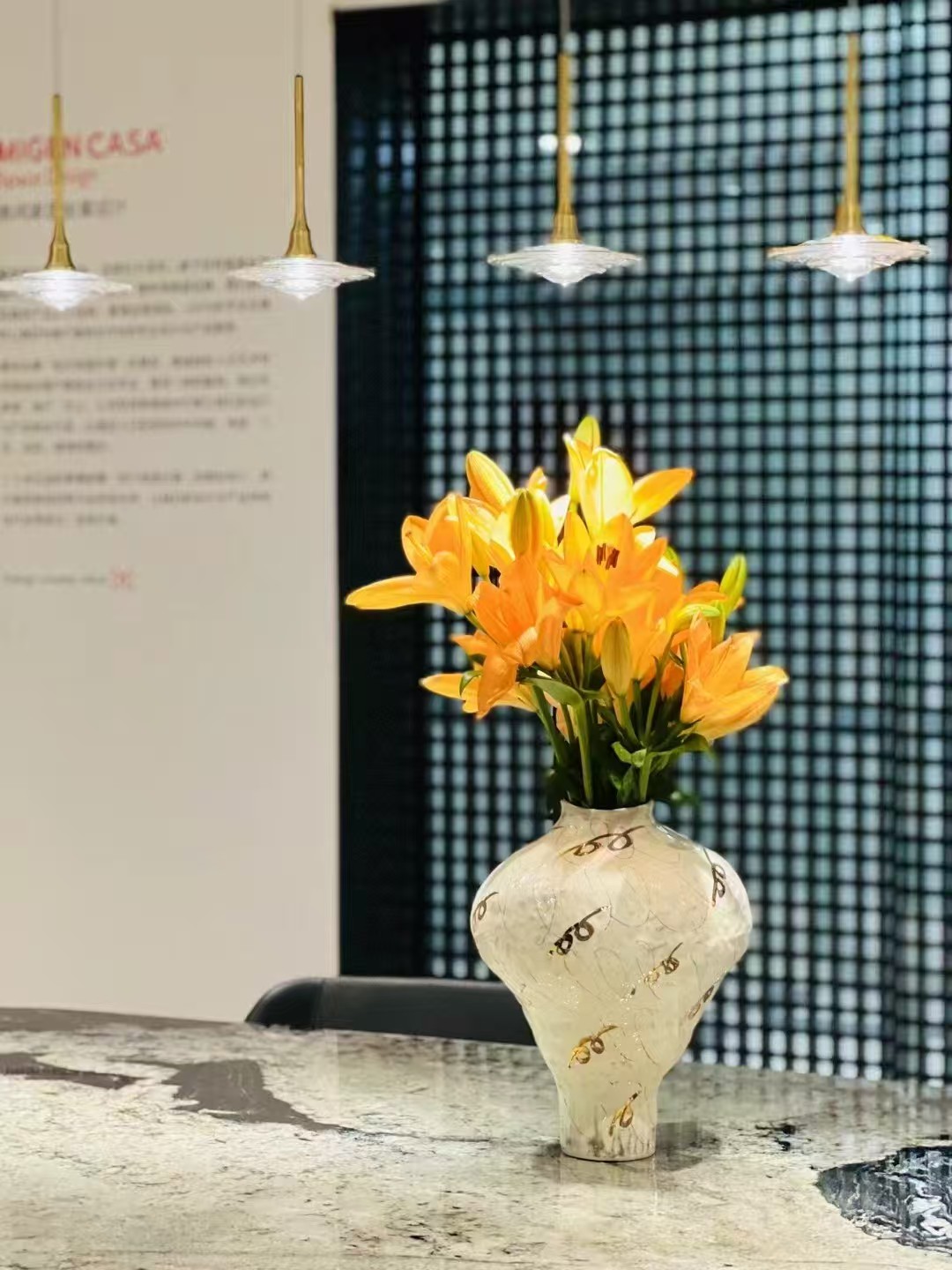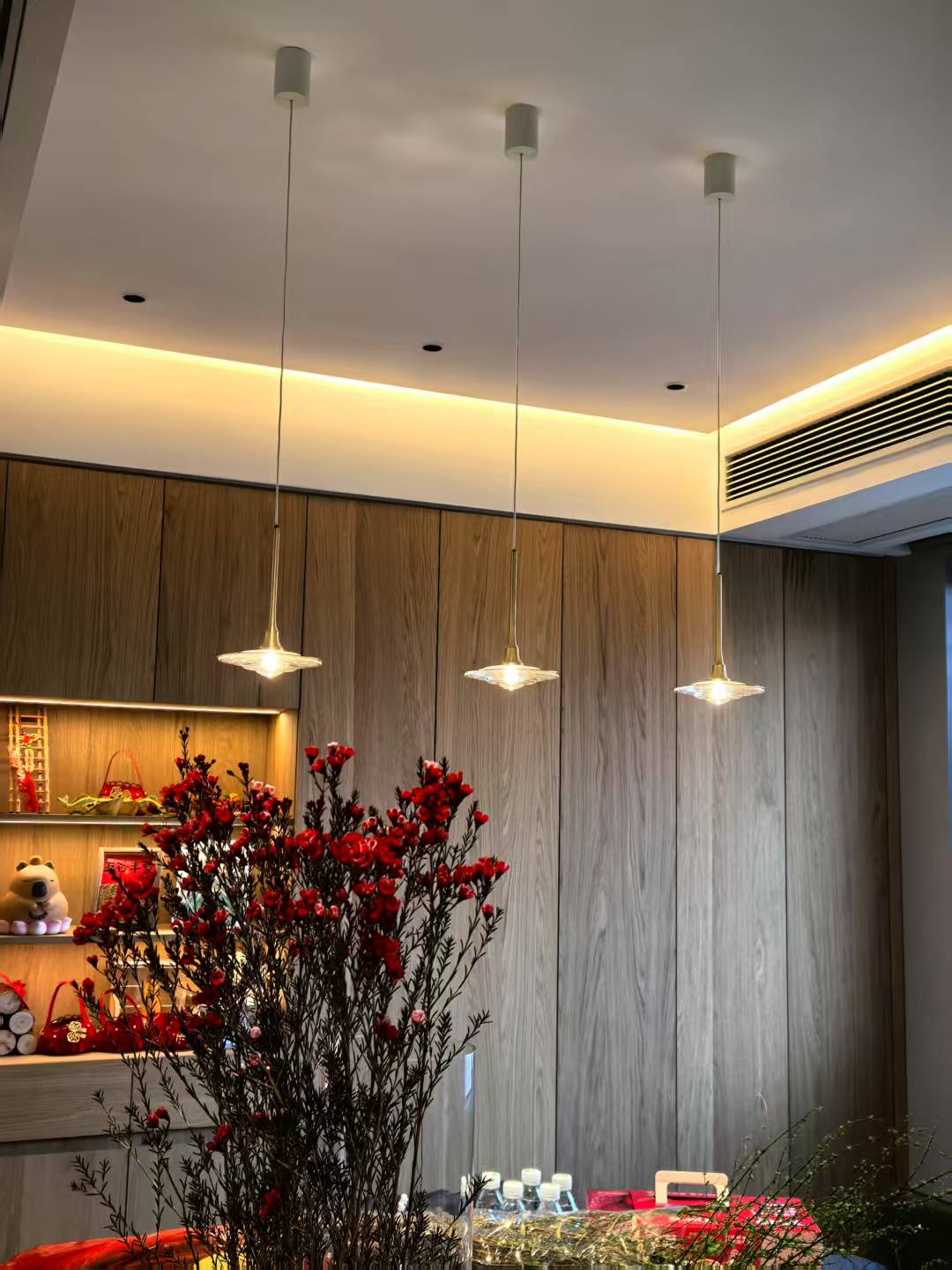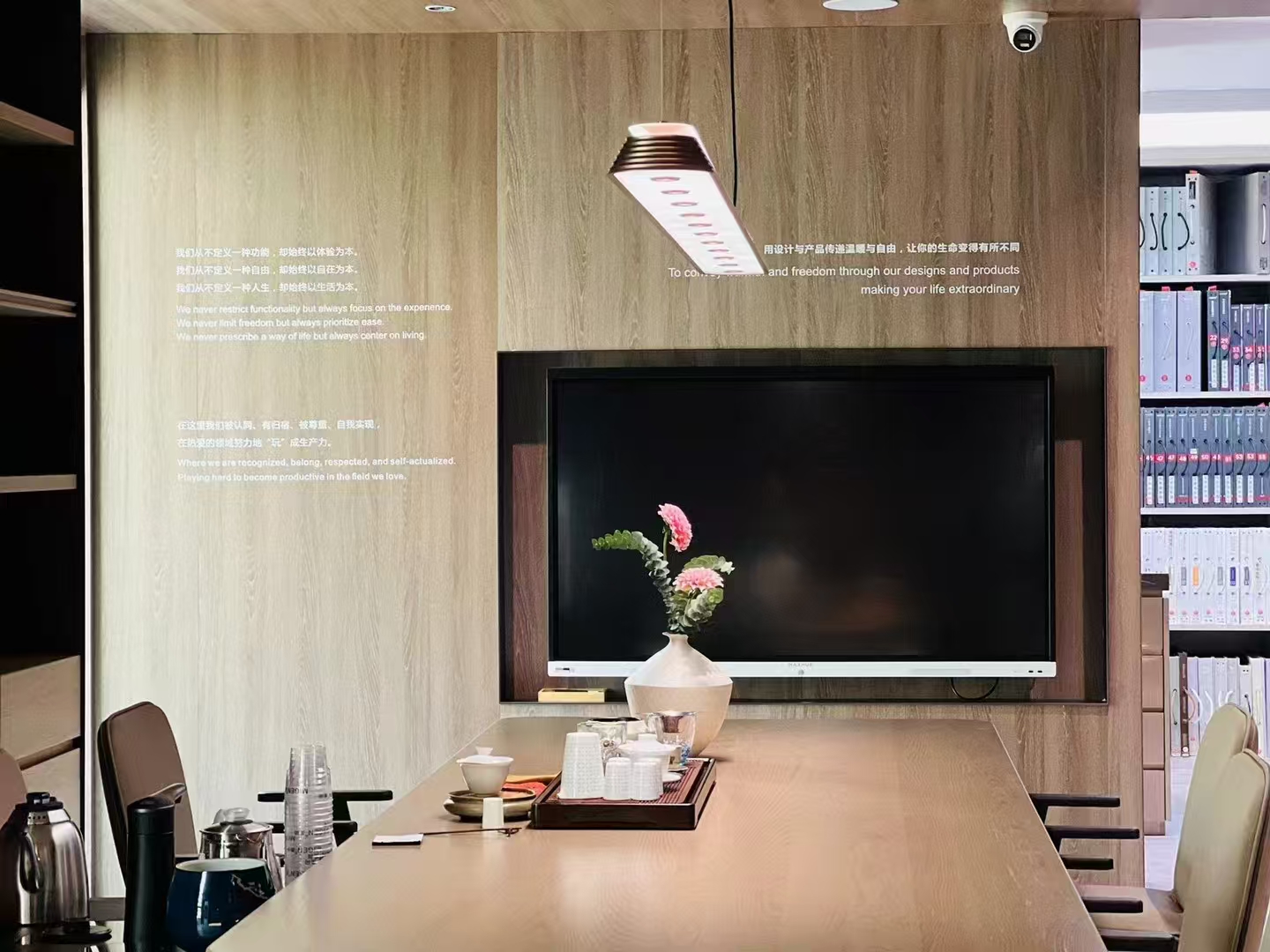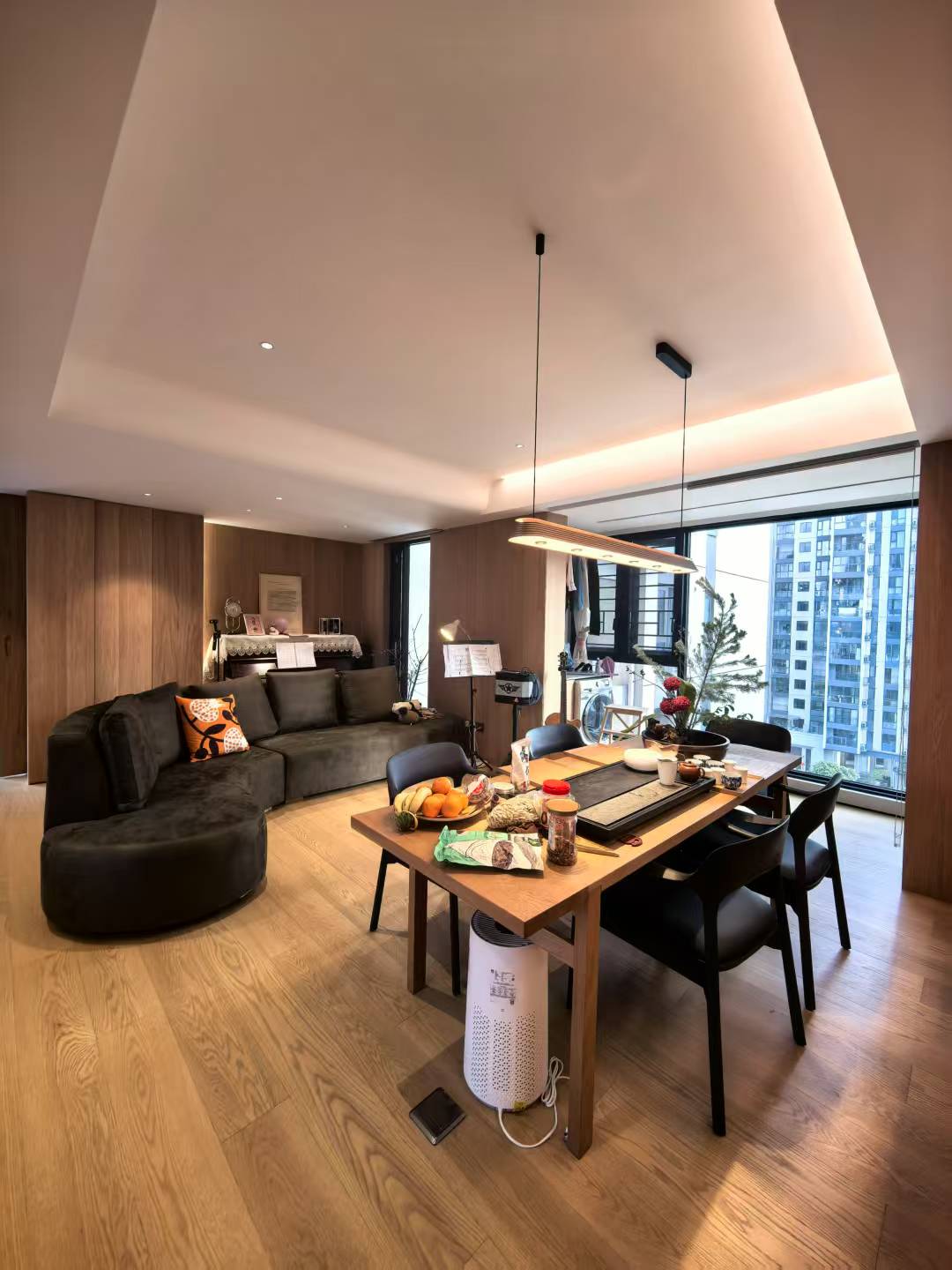
This project is a residential lighting optimization case for an occupied home. Addressing issues such as excessive fixture placement, glare from downlights, and unbalanced brightness, we restructured the lighting system through professional diagnosis—using fewer fixtures to create a more comfortable, layered, and harmonious lighting environment.
Overall Lighting Issues
Excessive lighting fixtures with poorly planned placement caused over-bright areas and a lack of atmospheric layering
Extensive use of downlights as diffused light sources resulted in glare and visual discomfort
Overall Optimization Strategy
Reorganized lighting logic and fixture placement to achieve atmosphere with fewer lights
Replaced glare-prone downlights with deep anti-glare luminaires to reduce indoor light pollution
Created spatial depth using high-, mid-, and low-level lighting instead of relying solely on ceiling lighting
Living Room & Tea Area:
Issues:
Fixtures installed too close to cabinetry caused overexposed light spots
Beamless downlights in the corridor produced scattered light and visible wall blotches
Insufficient floor illumination (50–90 lx), resulting in poor spatial brightness
Solutions:
Removed three downlights above cabinetry to restore clean visual order
Replaced downlights with anti-glare spotlights for corridor lighting
Ensured light reaches both walls and floor to improve circulation brightness
Living Room & Kitchen:
Issues:
Overall ambient lighting was excessively bright
Illuminance exceeded 800 lx at 0.75 m working height
Prolonged exposure caused glare and eye fatigue
Solutions:
Replaced downlights with adjustable anti-glare spotlights
Reduced fixture wattage and optimized placement
Controlled overall illuminance to 150–350 lx for visual comfort
Directed light toward task areas without disturbing seating zones
Kids’ Bedroom:
Issues:
Ceiling downlights provided uneven illumination with insufficient glare control
Limited lighting functions failed to support children’s activities
Solutions:
Controlled illuminance between 400–750 lx with uniformity ≥ 0.7
Replaced with dimmable soft-light ceiling fixtures
Enabled brightness adjustment for different times and needs
Added adjustable desk lamps for study tasks
Primary Bedroom
Issues:
Beamless downlights above wardrobes caused glare
Lack of bedside reading lighting
Indirect cove lighting alone was insufficient
Solutions:
Replaced downlights with adjustable anti-glare spotlights
Added multifunctional table lamps for reading
Introduced mid-level cabinet lighting on the left side
Used diffused light to enhance spatial width and relaxation
This lighting optimization was not merely about replacing fixtures, but about redefining lighting logic through professional analysis. The best lighting design is one that feels invisible—yet profoundly transforms the living experience.